

An Intro to Chinese History for ESL Teachers
Over the course of five thousand years, China and her cultures have made profound impacts across the ages.
History is a fickle subject to teach. It’s deeply tied to national identity, often reshaped over time and filtered through cultural lenses. Many nations prioritize teaching their own narratives but often overlook the broader global context.
When I first arrived in China, my knowledge of its history was limited to generalized strokes shaped by Western media. This was, in practice, a drastically limiting worldview. Chinese history is complex and vibrant, well-preserved through architecture, artifacts, and literature.
Below is a very brief outline of Chinese history. For ESL teachers starting their careers in China, understanding the foundation of the country can provide connections with students and the surrounding community.
The main periods which the post visits includes:
- Ancient Chinese History
- The Yangshao (5000–3000 BCE) and Longshan (3000–2000 BCE) Cultures
- The Legendary Xia Dynasty and Historical Shang Dynasty (1600–1046 BCE)
- The Zhou Dynasty and the Mandate of Heaven
- The Warring States Period
- The Qin Dynasty and First Emperor of China (221–207 BCE)
- The Rise of the Han Dynasty (206 BCE–220 CE)
- The Tang Dynasty (618 CE–907 CE)
- The Song Dynasty (960–1279 CE)
- The Yuan Dynasty (1271–1368 CE)
- The Ming Dynasty (1368–1644 CE)
- Qing Dynasty (1644–1912 CE)
- An Overview of Modern China (1912 CE to present)
Ancient Chinese History
Around 5,000 years ago, Neolithic cultures in the Yellow River (Huang He) Valley began to shape what would become Chinese civilization. These early communities are part of the world’s independent cradles of civilization, alongside Mesopotamia, the Indus Valley, the Nile, the Caral–Supe culture of South America, and the Olmecs in Central America.
The Yangshao (5000–3000 BCE) and Longshan (3000–2000 BCE) cultures are notable examples. They developed early agriculture, pottery, and social systems. China’s semi-mythical first dynasty, the Xia, is said to have emerged around 2100 BCE, though archeological evidence is scarce.
The first archaeologically confirmed dynasty, the Shang (1600–1046 BCE), left behind oracle bones and bronze artifacts. The Shang Dynasty Culture wasn’t a monolith culture in the region; though later Chinese history would often be defined by a singular ruling dynasty and its rivals, the Shang Dynasty era had political entities that existed concurrently. Features like oracle bones and bronze relics, as well as transmitted texts attest the historical existence of the Shang dynasty. Excavations at Anyang revealed the earliest Chinese writing, used for divination, offering clear evidence of Shang governance and belief systems.

Emergence of the Zhou Dynasty
Following the influence of the Shang Dynasty, the Zhou Dynasty emerged, ruling as the longest-lasting dynasty in Chinese history, ruling from 1046 BCE to 256 BCE. The Zhou Dynasty succeeded the Shang after the Battle of Maye. This dynasty introduced the Mandate of Heaven, a lasting political-religious concept claiming divine legitimacy for rulers. When a ruler lost moral authority, it was believed that Heaven would withdraw its support, justifying rebellion. Rulers could lose the Mandate of Heaven through repeated signs (natural disasters), by losing the “will of the people” or simply lacking the strength granted by Heaven to win militarily.
The Spring and Autumn Period (722–476 BCE) saw regional states gaining power and competing for dominance. It was also a time of intellectual flourishing. This period of conflict saw the rise of some of China’s most influential philosophers and thinkers enter the global stage. Laozi the principle founder of Taoism, Confucius the creator of the philosophy of Confucianism, and Sun Tzu famed Chinese military strategist were all born in this time period. Other philosophies, such as Legalism and Mohism, also emerged.
The Warring States Period
By the 5th century BCE, China was divided into seven major states. This era of conflict, known as the Warring States Period, lasted until 221 BCE. The Zhou kings remained in name only, with real power held by warlords.
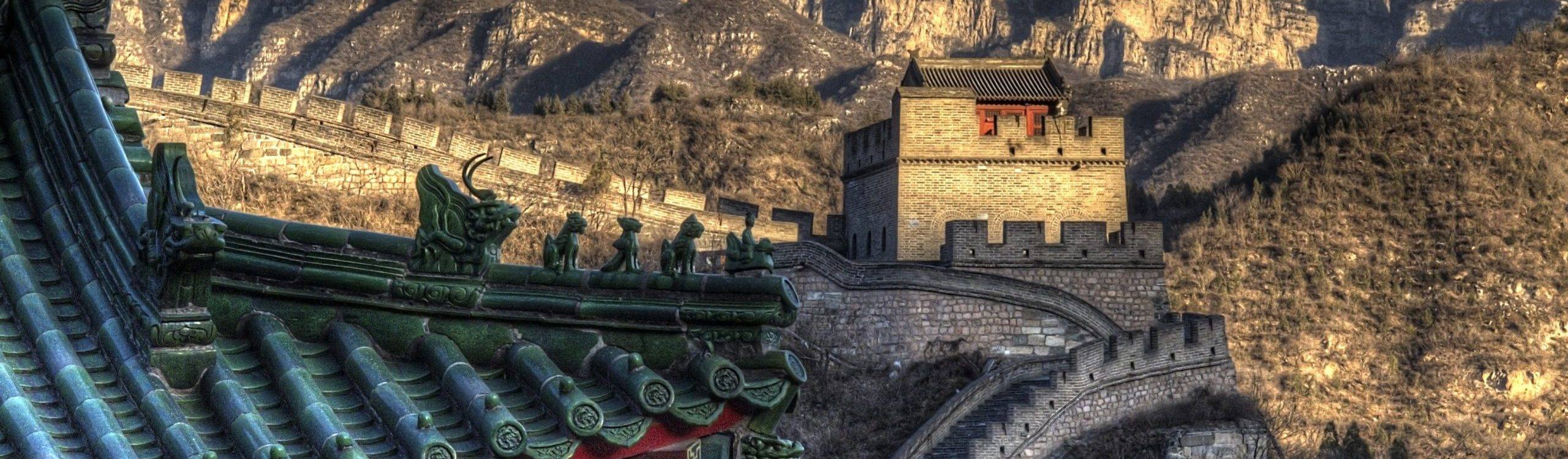
The state of Qin became dominant in the waning decades of the Warring States period, conquering the Shu capital of Jinsha on the Chengdu Plain; and then eventually driving Chu from its place in the Han River valley. The Qin state, under the leadership of Ying Zheng, gained dominance and eventually unified the other six states. Declaring himself Qin Shi Huang, he became China’s first emperor. His reign saw the construction of the Great Wall, a unified legal code, a vast road network, and the famed Terracotta Army in his city-sized mausoleum near modern Xi’an.
The Chinese Dynastic Imperial Era
The Qin Dynasty (221–207 BCE) established a centralized imperial bureaucracy that shaped China’s governance for millennia. Harsh policies, forced labor, and immense infrastructure projects marked its short reign.
Following its collapse, the Han Dynasty (206 BCE–220 CE) rose to power. Under Liu Bang and later rulers, the Han era became a golden age of political stability, scientific advancement, and cultural flourishing. Art, culture and science all advanced to unprecedented heights. Confucianism became the official ideology, and Han influence extended far across Asia.
The Han Dynasty would eventually fall to rebellion led by the Xin Dynasty, though the Xin Dynasty only lasted from 9 CE to 23 CE. Afterwards, the Eastern Han Dynasty was reinstated by Emperor Guangwu. The Han Dynasty thrived thanks to the capable administrations of Emperors Ming and Zhang, former glories of the dynasty were reclaimed, with brilliant military and cultural achievements.
During its reign, the Eastern Han Dynasty reopened the Silk Road bringing trade, foreign cultures, along with the arrival of Buddhism. Additionally, the dynasty welcomed diplomatic contact with their famed western contemporaries, the Roman Empire.
The Eastern Han dynasty was one of the most prolific eras of science and technology in ancient China. While its inventions and successes are a vast list, some notable historic creations include papermaking by Cai Lun. During this era, Chinese identity became closely tied to the term “Han,” which still refers to the dominant ethnic group and language in modern China. The Han Dynasty effectively provided the state-system framework which all subsequent Chinese dynasties would work within.

The Famed Dynasties of the Middle Kingdom
The centuries that followed included civil wars, regional fragmentation, and reunifications.The following centuries saw numerous ruling clans, imperial households, rival powers and prominent historical events. This includes the Three Kingdoms Period, the reunification of China under the Jin Dynasty, the fragmented era of the Sixteen Kingdoms, the rise of compatible Buddhism and Taoism beliefs under Northern and Southern Dynastic period, the beginning of Mid-Imperial China and the Sui Dynasty’s immense construction projects, including the creation of the Grand Canal.
After this period, some of China’s most famed, notorious and influential dynasties emerged to shape the nation’s history forever. Many of the preserved artifacts, historical sites, fortifications and writings stem from these ages. Highlights include:
Tang Dynasty (618–907 CE)
– A golden age of poetry, cultural cosmopolitanism, and expansion along the Silk Road. The dynastic era is remembered for its artistic achievements, particularly in poetry, and its cosmopolitan capital, Chang’an, which became a major international hub for trade. Modern historians generally regard the Tang Dynasty period as a high point in Chinese civilization. The dynasty was preceded by the Sui dynasty and followed by the Five Dynasties and Ten Kingdoms period.
Song Dynasty (960–1279 CE)
– The Song Dynasty was known for economic prosperity, innovations like printing and gunpowder, and the development of Neo-Confucianism. The dynasty was founded by Emperor Taizu of Song, a powerful ruler who usurped the throne of the Later Zhou dynasty. Emperor Taizu of Song went on to conquer the rest of the Ten Kingdoms, ending the Five Dynasties and Ten Kingdoms period. The dynasty saw significant developments in various fields, including agriculture, printing, weaponry, and shipbuilding. Inventions such as movable type printing, gunpowder, the compass, and advancements in mechanical clocks all fueled accelerated economic growth during this time period. After two decades of sporadic warfare, Kublai Khan’s armies conquered the Song dynasty in 1279.
Yuan Dynasty (1271–1368 CE)
– The Yuan Dynasty, founded by the Mongols under Kublai Khan, connected China to the wider world and expanded trade across Eurasia. The rise of the Yuan Dynasty represents the first time a foreign power (the Mongols) unified all of China under a single rule. The Yuan dynasty is known for its significant contributions to Chinese art, particularly in painting and calligraphy. After Kublai Khan’s death, a series of short-reigning emperors struggled to maintain control, leading to power struggles and coups within the Mongol ruling class.
Ming Dynasty (1368–1644 CE)
– The Ming was the last imperial dynasty of China ruled by the Han people, the majority ethnic group in China. The era was famous for naval expeditions (including the legendary voyages of Zheng He), the restoration of the Great Wall, and a strong civil bureaucracy based on Confucian ideals. The Ming Dynasty is also known for the construction of the Forbidden City, its impact on Chinese novels (including the “Four Great Classical Novels”) and he flourishing of blue and white porcelain.
Qing Dynasty (1644–1912 CE)
– Being the last imperial dynasty in Chinese history, the Qing dynasty was preceded by the Ming dynasty and succeeded by the Republic of China. The Qing dynasty was originally founded not by Han Chinese, who constituted a majority of the population, but by the Manchus, a sedentary farming people descended from the Jurchens. The Jurchens were a Tungusic people who lived in the region now comprising the Chinese provinces of Jilin and Heilongjiang. The Qing Dynasty greatly expanded China’s territory and governed through Confucian principles but eventually struggled with internal rebellion and foreign encroachment, leading to its downfall. Foreign imperialism, the Opium Wars, the Sino-Japanese War, the White Lotus Rebellion, Taiping Rebellion, and Dungan Revolt were all major factors in the Qing Dynasty’s dissolution.
Modern China
Republic of China (1912–1949)
After the Qing fell, Sun Yat-sen founded the Republic of China. The country soon fractured into regions controlled by warlords. Later, it faced Japanese invasion and a civil war between the Nationalists (KMT) and Communists.
People’s Republic of China (1949–1976)
The Communist Party, led by Mao Zedong, founded the People’s Republic of China in 1949. The era was marked by extreme campaigns such as the Great Leap Forward and the Cultural Revolution, causing massive social and economic upheaval, along with industrialization and modernization policy implementations.
Reform and Opening-Up (1978–1990s)
After Mao’s death, Deng Xiaoping shifted China toward economic reform. Special Economic Zones opened to foreign trade, and market elements were introduced, transforming China into a major industrial power.
Contemporary China (2000s–Present)
China has grown into a global superpower. It leads in global manufacturing, innovation, and international diplomacy. Despite rapid development, the country remains a one-party state with tight political control, strong national identity, and a growing focus on technological advancement.
Conclusion
China’s history is vast, complex, and deeply influential. For ESL teachers, a basic understanding of the country’s past provides valuable insight into its culture, values, and people. Whether in the classroom or navigating daily life, historical awareness enriches every part of the teaching experience in China.

Learning Chinese Culture as an ESL Teacher: Sun Tzu
Learning Chinese Culture as an ESL Teacher: Sun Tzu The tale of literature written by [...]

10 Fascinating Chinese Mythological Creatures
10 Fascinating Chinese Mythological Creatures Chinese mythology is a vast and compelling topic with endless [...]

Thing to Avoid When Gift Giving in China
Things to Avoid When Gift-Giving in China Essential tips for ESL teachers working abroad If [...]

19 Affordable Gifts for Your Chinese Coworkers
19 Affordable Gifts for Your Chinese Coworkers Practical tips for thoughtful, budget-friendly presents When teaching [...]

6 Ways to Improve Your Teacher Voice in an ESL Class
Ways to Improve Your Teacher Voice in an ESL Class When teaching English as a [...]

10 Advanced Ways to Improve Second Language Listening Abilities
10 Advanced Ways to Improve Second Language Listening Abilities Learn tips and techniques for improving [...]

12 Great Books to Prepare You for an ESL Career in China
12 Great Books to Prepare You for an ESL Career in China Teaching English in [...]

4 Ways to Improve as a Candidate for ESL Jobs in China
4 Ways to Improve as a Candidate for ESL Jobs in China China’s ESL job [...]
7 Online Courses for ESL Teachers
7 Online Options for Continued Education as an ESL Teacher Introduction One of the excellent [...]

6 Tips for Better ESL Teacher Observations
6 Tips for Teacher to Teacher Observations in the ESL Classroom Learn how to interact [...]

Unique Sights Throughout Guangdong, China
Unique Sights Throughout Guangdong, China Explore the province beyond the cities, one stop at a [...]

An Intro to China’s Mid-Autumn Festival for ESL Teachers
An Intro to China's Mid-Autumn Festival for ESL Teachers The Mid-Autumn Festival, known in Mandarin [...]